What Is BMI?
BMI stands for Body Mass Index. It is a numerical value calculated from a person's weight and height. BMI is widely used as a general screening measure for adults.
It provides a quick mathematical way to compare weight with height, but it does not directly measure body fat, muscle mass, fitness or overall health.
BMI Formula
Weight is measured in kilograms.
Height is measured in meters.
If height is entered in centimeters, it must first be converted to meters.
BMI Calculation Example
Suppose an adult weighs 70 kg and is 175 cm tall.
BMI Formula Using Pounds and Inches
BMI can also be calculated using pounds and inches.
The online calculator can perform this conversion automatically when the Imperial option is selected.
General Adult BMI Categories
Common adult BMI screening categories are divided into ranges.
| BMI Range | General Category |
|---|---|
| Below 18.5 | Underweight |
| 18.5 to 24.9 | Healthy weight |
| 25.0 to 29.9 | Overweight |
| 30.0 or higher | Obesity |
These ranges are general adult screening categories. They do not describe every person's health in the same way.
What Does a BMI Number Mean?
A BMI number gives a height-to-weight ratio that can be placed into a general screening category. It is useful for population-level screening and can provide a starting point for discussing weight-related health factors.
It should not be interpreted as a complete description of an individual's body composition or health status.
Why BMI Has Limitations
BMI uses only height and weight. It does not measure how much of a person's weight comes from muscle, fat, bone or other tissues.
This means that two people with the same BMI can have very different body compositions.
Muscle Mass
A person with substantial muscle mass may have a higher BMI because muscle contributes to body weight. BMI cannot separate muscle from fat.
Fat Distribution
BMI does not show where fat is stored in the body. Measures of waist circumference and other assessments can provide additional information in appropriate circumstances.
Individual Differences
Age, sex, ethnicity, body composition and other factors can affect how useful a BMI value is for an individual.
BMI for Children and Teenagers
Adult BMI categories should not simply be applied to children and adolescents.
Children and teenagers are still growing, so BMI is interpreted using age- and sex-specific approaches.
BMI and Older Adults
BMI can also have limitations in older adults because body composition can change with age. Loss of muscle mass, changes in body fat and other factors may affect how a BMI number should be interpreted.
Does a Healthy BMI Always Mean Good Health?
No. A BMI within a commonly used healthy-weight range does not guarantee good overall health.
Health is influenced by many factors, including physical activity, nutrition, blood pressure, blood glucose, sleep, medical history and other individual circumstances.
Does a Higher BMI Always Mean Poor Health?
No. BMI is a screening measure and should not be used alone to diagnose an individual's health condition.
For example, higher muscle mass can contribute to a higher BMI without representing the same body-fat level as another person with the same BMI.
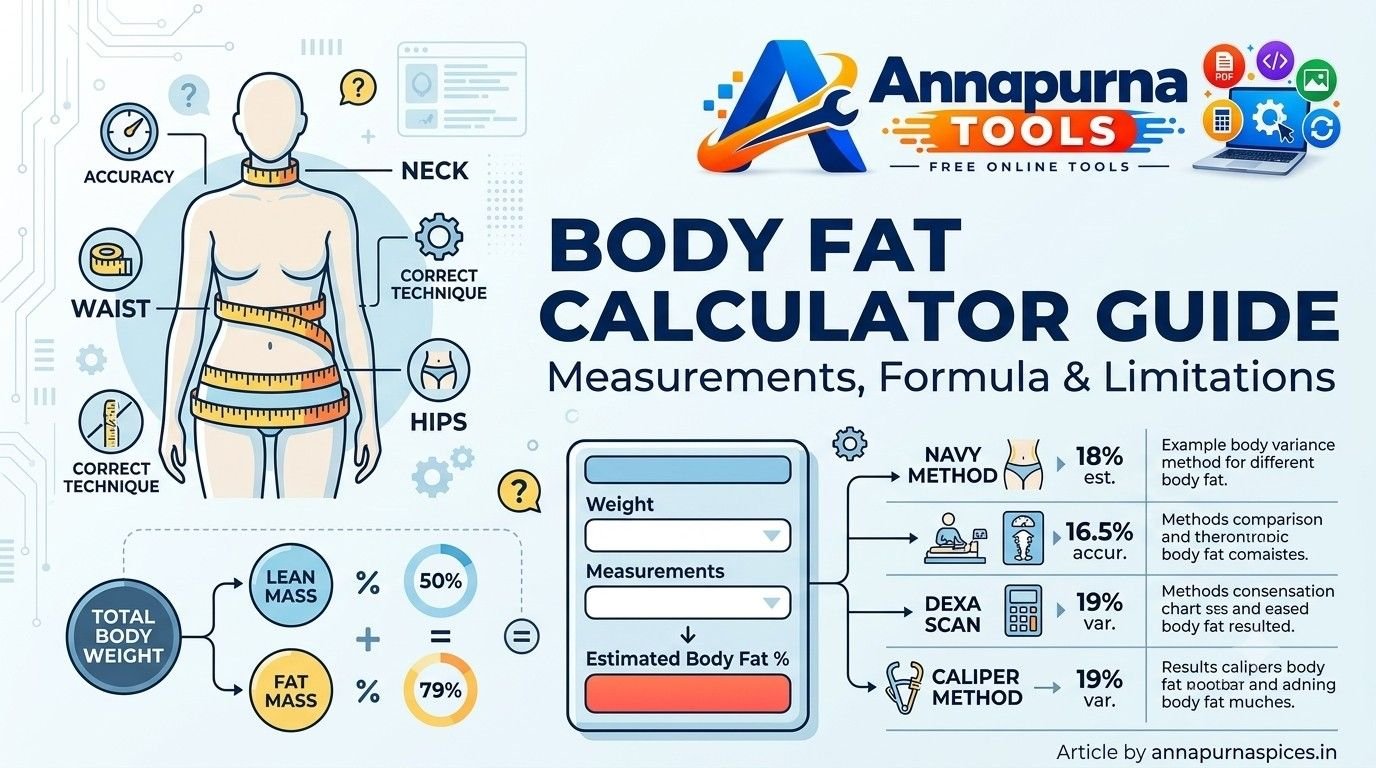
BMI vs Body Fat Percentage
BMI and body-fat percentage are different measurements. BMI uses height and weight. Body-fat percentage attempts to estimate how much of total body weight is fat.
Neither measure alone provides a complete picture of health.
Common BMI Calculator Mistakes
- Entering centimeters when meters are expected.
- Mixing pounds with a metric calculation.
- Entering the wrong height or weight.
- Applying adult BMI categories to children.
- Treating BMI as a diagnosis.
- Assuming BMI directly measures body fat.
How to Use the BMI Calculator
- Select Metric or Imperial.
- Enter your weight.
- Enter your height.
- Select Calculate BMI.
- Review the BMI number and general category.
- Consider the limitations before interpreting the result.
When to Seek Professional Guidance
If you have concerns about weight, nutrition, growth, body composition or another health issue, a qualified healthcare professional can consider your complete situation rather than one calculator result.
Professional assessment can include medical history, physical measurements, lifestyle factors and other information that an online calculator cannot collect.
Try the BMI Calculator
After understanding the formula and its limitations, you can use the BMI Calculator to enter your height and weight and view the calculated BMI.